Home › Services
Aluminum and ornamental fences for Noblesville yards, pools and open-style neighborhoods
Ornamental aluminum looks like the black iron fencing around old courthouse squares, but it weighs a fraction as much and never rusts. That combination explains why it shows up so often around Noblesville pools, along front walks, and behind homes in subdivisions where the association forbids anything solid. It is also a material where quality hides well in a catalog photo: two black fences can look identical at the curb and differ sharply in wall thickness, rail design, coating and gate hardware. This page explains what separates them, how panels follow a sloped yard, and what a pool enclosure has to do, so the proposals you collect make sense. When you are ready, start on the contact page.
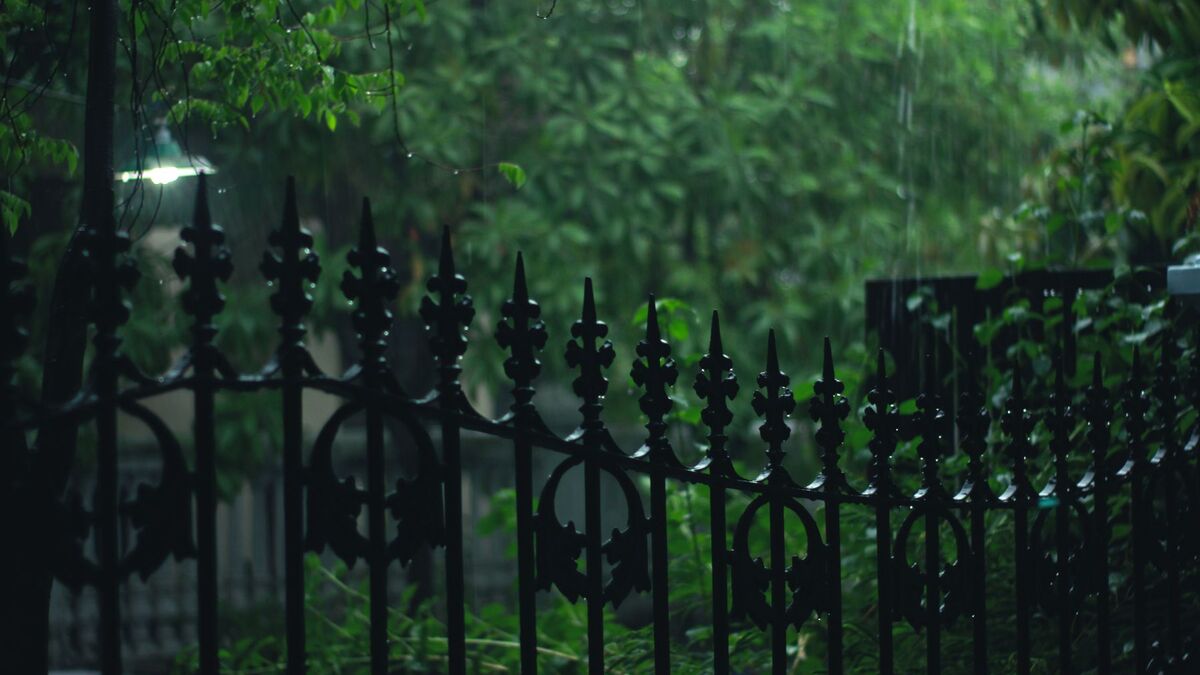
Aluminum, steel or wrought iron: three metals that look alike from the street
True wrought iron is hand-forged and now rare in residential work; most of what people call wrought iron today is welded steel tubing. Steel ornamental fencing is strong and rigid, and for security or heavy impact it has the edge. Its weakness is rust. Once the coating chips at a weld, a scratch or the bottom of a post, moisture reaches the steel, and in a central Indiana climate of wet springs, freeze-thaw winters and road salt, that spot keeps spreading.
Aluminum gives up some rigidity in exchange for a metal that does not rust at all. It oxidizes, but that thin oxide layer protects the surface instead of eating through it. A scratched aluminum picket may look dull at the scratch; it will not bleed orange streaks down the panel. For most homes, where the job is marking a boundary, enclosing a pool or keeping a dog in, aluminum carries the look of iron with far less upkeep. Steel still earns its place on estate gates, perimeters that need real security, and driveways where a vehicle might hit the fence.
Residential, commercial and industrial grades
Manufacturers sort aluminum fencing into grades by the size and wall thickness of the posts, rails and pickets. The names vary by brand, but the pattern holds:
- Residential grade: lighter pickets and rails, suited to yards, gardens and most pool enclosures where nobody leans a ladder against it.
- Commercial or heavy residential grade: thicker pickets and larger rails that resist kids hanging on them, big dogs, and bumps from mowers and wheelbarrows.
- Industrial grade: heavy profiles for apartment pools, parks, schools and properties with real traffic.
- Posts and gate frames often step up a grade even on a residential fence, because that is where loads concentrate.
Picket and rail styles, and what each one changes
Style choice is not only about looks. The top of the picket, the number of rails and the picket spacing all affect climbability, dog containment and how well the fence meets a pool rule or an association guideline.
- Flat top: pickets stop under the top rail, giving a clean line that is friendly to kids and easy to look over.
- Pressed spear top: pickets pass through the top rail and end in a pinched point, the most traditional ornamental look.
- Finials: decorative caps such as spears, quads or balls fastened to the picket tops, adding cost and a more formal look.
- Two-rail versus three-rail: a third rail stiffens the panel and is common on taller fences; the rail position also matters for climbing.
- Puppy pickets: extra short pickets between the main ones along the bottom, closing gaps a small dog or rabbit could slip through.
- Arched and flared sections: panels and gates that rise or dip in a curve, usually used to frame an entry walk.
Following the slope: rackable panels versus stepped panels
Hamilton County is mostly flat, but almost every yard has a fall somewhere: a swale behind the house, a drop toward a pond, or a mound left by grading. Ornamental panels handle grade in one of two ways.
Rackable panels have pickets that pivot slightly at the rail connections, so the whole panel can lean into a parallelogram that follows the ground while the pickets stay plumb. On gentle, steady slopes this keeps the bottom rail at an even height above grade and leaves no triangular gaps. Each product has a limit to how far it racks, and steeper ground goes beyond it.
Stepped panels stay square and drop down the hill in stair steps from post to post. The look is more formal and works on steep or uneven ground, but each step leaves a triangle under the panel. For a dog or a pool barrier, those gaps have to be addressed with grading, puppy pickets or a different layout. A good contractor walks the line with a level before choosing one approach.
Pool fences: self-closing, self-latching gates and barrier rules
Aluminum is one of the most popular materials for pool enclosures because it is open to view, corrosion resistant near splashing water and chemicals, and comes in configurations designed for barrier rules. Pool barrier requirements are set by the code adopted for the address, and they cover topics like these:
- Overall barrier height, measured on the side away from the pool.
- Gaps between pickets and between the bottom of the fence and the ground.
- Horizontal members that a child could use as footholds to climb.
- Gates that swing outward, away from the pool, and close themselves from any open position.
- Latches that engage on their own and sit high enough, or on the pool side, that a small child cannot reach them.
- Nearby objects such as planters, AC units or furniture that could be pushed against the fence and climbed.
The actual figures for each of these come from the adopted code, so the contractor and the local building department set them for your yard -- not a product brochure. Gate hardware matters most: spring-loaded hinges with adjustable tension and a magnetic, gravity-assisted latch hold up far better than a basic hook. A pool gate has to swing shut and latch from any point, on a calm day and a windy one, and that needs checking every season, because hinge tension drifts. Pool enclosures typically need a permit and an inspection. If the association also has a say, apply to both before ordering material.
Corrosion, coatings and the small details that fail first
Aluminum itself does not rust, so the finish is what wears. Better products use a multi-step pretreatment before a polyester powder coat is baked on, which keeps the paint gripping the metal instead of flaking or chalking. A cheaper finish can blister at cut edges and screw holes within a few seasons.
Watch the fasteners. Plain steel screws in aluminum rails rust and stain, and dissimilar metals in contact can corrode each other where water sits. Stainless or coated fasteners matched to the system avoid that. Along driveways and walks, de-icing salt splashes onto the lower rails every winter; a rinse in spring keeps salt crust from attacking the coating. Field cuts made during install should be touched up with matching paint the day they are made.
Setting posts for ornamental panels
Ornamental panels come in fixed widths, which means post spacing has to be exact. On a wood fence a carpenter can trim a rail to fit; on aluminum, a post set a little long or short leaves a panel that will not fit, or one that has to be cut and refitted. Installers often set each post as they go, using the actual panel as the spacer, rather than setting every post first.
Posts go in concrete footings that reach below the frost line for a central Indiana winter, with the required depth confirmed with the local building department. Heavy clay that heaves in winter will push a shallow post upward, and with ornamental panels even a small rise shows as a crooked top rail. Around an existing pool deck or patio, posts may be core-drilled into concrete or surface-mounted on base plates instead. The digging, locates through Indiana 811 and general sequence are covered on the fence installation page.
Subdivisions that ban privacy fences
Many Hamilton County associations limit or prohibit solid fences, especially on lots that back to ponds, golf course edges, common greenspace or trail corridors. The goal is to keep sightlines open. Ornamental aluminum is often the style these rules are written around, sometimes with a required color, height and picket top.
Even when aluminum is clearly allowed, submit a drawing showing the fence line, height, style and gate locations, and wait for written approval before ordering. Where chain link is allowed, black vinyl-coated chain link fencing can be a lower-cost open option for rear lines. If the goal is screening and the association allows it, compare vinyl fences instead.
What drives the cost of an aluminum fence
Aluminum usually costs more than chain link and lands near or above vinyl for comparable length, depending on grade and style. The contractor prices it after seeing the yard. These are the drivers:
- Total length, number of corners and ends, and how much the line has to turn.
- Grade of the system, from residential to industrial.
- Height, picket top style, finials, puppy pickets and the number of rails.
- Gates, especially self-closing pool gates and double drive gates with heavier frames.
- Slope, which can mean rackable panels, custom stepping or more cuts.
- Mounting method: soil footings, core drilling into an existing deck, or surface-mount plates.
- Removal of an old fence and haul-away.
What a complete ornamental fence proposal spells out
Look for the product line and grade by name, the height, picket style and rail count, the post sizes, gate count, width and hardware, how slopes will be handled, how posts are set and to what depth requirement, who pulls any permit and handles the association paperwork, and what workmanship coverage applies. For a pool, the proposal should say the fence and gates will be built to the adopted barrier code for the address.
Damaged panels, bent pickets and gates that stopped latching are handled on the fence repair page. For an ornamental project in Noblesville, Carmel, Fishers or elsewhere in the wider Hamilton County service area, Noblesville Fence pairs you with a local residential installer. A sketch of the run, the street address and some pictures can go in through the contact page.
Aluminum and ornamental fences for Noblesville yards — common questions
Is aluminum fence strong enough to keep a big dog in?
Often, yes, if the grade and layout suit the dog. A heavier commercial-grade profile resists a dog jumping against it far better than light residential panels, and a three-rail design is stiffer. Height matters for jumpers, and picket spacing matters for small or slim breeds that try to squeeze through. Add puppy pickets along the bottom for little dogs, and make sure the bottom rail sits close to grade so nothing can dig or wiggle under. A determined climber may do better behind a solid fence.
Does a pool fence in Indiana need a self-closing gate?
Pool barrier rules adopted by local governments generally call for gates that close and latch on their own, with the latch out of a small child's reach, and they also address height, gaps and climbable parts. The specific figures come from the code adopted for your address, so confirm them with the city or town building department before ordering. A good contractor builds to that code and sets hinge tension so the gate closes from any position. Check the gate every month during swim season.
What is the difference between aluminum and wrought iron fencing?
Wrought iron and the welded steel sold under that name are heavier and more rigid, which helps for security and impact. Steel also rusts once its coating is broken, so it needs sanding and repainting over time. Aluminum cannot rust, weighs much less, and holds a baked powder coat for many years with little more than an occasional rinse. From the street, the two look very similar. For most homes and pools, aluminum is the lower-maintenance choice; steel suits heavy-duty gates and security perimeters.
Can aluminum fence panels be installed on a sloped yard?
Yes. Rackable panels pivot at the rail joints so the panel follows a gentle, steady slope while the pickets stay vertical, leaving no gaps underneath. On steeper or uneven ground, panels are stepped down the hill instead, which keeps them square but leaves triangular gaps under each step that may need filling for a dog or a pool barrier. Every product has a racking limit, so the contractor should measure the grade along the actual line before ordering.
Will my HOA approve an aluminum fence?
Aluminum is the style many Hamilton County associations prefer, especially on lots that back to ponds, golf courses or common areas, because it keeps views open. Approval is still not automatic. Rules can specify the color, height, picket top and where on the lot a fence may sit. Read your covenants and design guidelines, submit a drawing with the line, height, style and gates, and wait for written approval before anything is ordered or installed.
How do you clean and maintain a powder-coated aluminum fence?
Maintenance is light. Rinse the fence with a garden hose once or twice a year, using mild soap and a soft brush on dirty spots, and avoid abrasive pads or harsh solvents that dull the finish. Each spring, wash salt residue off sections near the driveway or sidewalk. Check gate hinges and latches, tighten loose screws, and touch up any chip with matching paint before it spreads. Trim shrubs and vines that grow through the pickets, because they trap moisture and bend panels.
Talk through your site
Start with the address, what you want done, and a few photographs of the area, including anywhere water sits after a heavy rain.
Related work
Fence Installation
New fences planned around Hamilton County association rules, central Indiana clay and deep winter frost.
Fence Repair
Leaning and heaved posts, sagging gates, wind damage and rot, and when to stop repairing.
Wood Privacy Fences
Cedar and treated pine privacy styles, and how wood holds up through Indiana freeze-thaw.
Vinyl Fences
Vinyl privacy, semi-privacy and picket fences, and the quality differences that show up after a few winters.
Chain Link Fences
Galvanized and black-coated chain link for dogs, kids and back property lines.
Across the metro
Fishers
Dense subdivisions with strict association fence rules, pools and lots backing to common areas.
Carmel
Established neighborhoods and newer luxury homes where style rules and front-yard looks matter.
Westfield
Fast-growing west-side builds on freshly graded lots with slow-draining clay.
Cicero
Lake-area lots around Morse Reservoir and rural acreage with long runs and wet ground.