Home › Services
Chain link fence in Noblesville, stretched tight and built to stay that way
Chain link gets written off as the plain choice, yet around Noblesville it handles jobs other materials struggle with: holding a dog that tests every corner, closing a back lot line that borders a field, or giving kids a yard a parent can watch from the kitchen window. How long it lasts comes down to details most buyers never ask about -- the thickness of the wire, the coating on it, the size of the pipe holding it up, and how hard the fabric gets pulled before anything is tied off. This page lays those details out so two proposals can be compared line by line, and when you are ready, the contact page is where to send the address and a few photos.
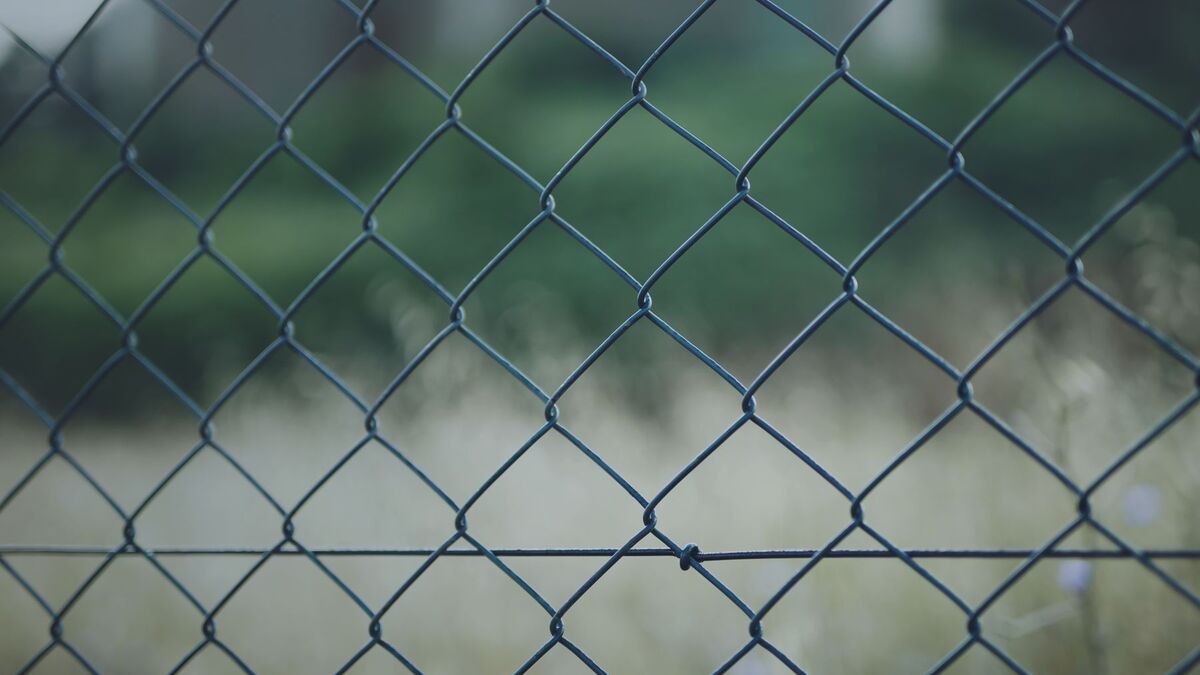
What a chain link fence is really made of
People picture the diamond mesh, but the mesh is only half the system. The other half is a steel pipe skeleton, and the way those halves are joined decides whether the fence looks crisp in ten years or droops like a hammock between posts. A residential run normally includes:
- Terminal posts: heavier pipes at every end, corner and gate opening. The fabric is stretched against these, so they carry the real load.
- Line posts: lighter pipes along the run that hold the fabric up and in line but do not resist the pull.
- Top rail: a continuous pipe through loop caps on the line posts that keeps the upper edge straight.
- Tension bars and bands: a flat bar woven through the fabric end, clamped to the terminal so the whole edge pulls evenly.
- Braces and truss rods: a mid-rail and diagonal rod at terminals on taller fences, stopping corner posts from bowing inward.
- Bottom tension wire or bottom rail: keeps the lower edge from being pushed out by a dog or a mower deck.
- Ties: aluminum or galvanized wraps fixing the fabric to posts and rail at regular intervals.
Wire gauge and mesh size, and why the numbers run backward
A smaller gauge number means thicker wire. Nine gauge is a stout residential and light commercial wire. Eleven and eleven-and-a-half gauge are lighter, cheaper and common in big-box kits. Six gauge belongs on industrial and security work.
The difference shows up the first time a large dog jumps against the mesh, a kid climbs it or a limb lands across the top. Lighter wire dents and stays dented; heavier wire springs back.
Mesh size is the width of each diamond, and the standard residential opening is a little over two inches. Smaller openings exist for tennis courts, pool areas and yards with tiny dogs that squeeze through. A tighter diamond uses more wire, so it costs more. Ask every proposal to name both numbers; a line that just says chain link fabric leaves the cheapest option open.
Galvanized silver or black vinyl-coated: more than a color choice
Plain galvanized chain link is steel wire with a zinc coating that corrodes slowly in place of the steel. Zinc weight varies. Fabric galvanized after weaving generally carries more than fabric woven from pre-coated wire, and a heavier coating holds off rust longer where a sprinkler soaks the same section every summer.
Black vinyl-coated chain link bonds a polymer layer over galvanized wire. It adds protection, but people mostly choose it because black mesh nearly vanishes against a lawn and tree line, while silver mesh reflects light and draws the eye.
If you go black, match the framework. Black mesh hung on silver pipe looks unfinished. Ask too whether the coating is thermally fused or simply extruded over the wire, since fused coatings resist peeling at cut ends and ties, exactly where cheap coatings begin to lift.
Why stretching the fabric matters more than any other step
Chain link is a tension structure, pulled between terminal posts like a drum skin over a rim. Tight fabric resists pushes and stays straight. Loose fabric lifts at the bottom, sags between posts, and teaches a dog to nose underneath within a week. A careful installer follows this order:
- Set terminal posts and let the concrete cure, because pulling against fresh concrete can tilt a post before it grabs.
- Run the top rail through the line post caps and fasten it at each terminal.
- Unroll the fabric along the outside of the posts, finished face toward the side the owner chooses.
- Weave a tension bar into the starting end and band it to the first terminal.
- Hook a fence stretcher between the far terminal and a temporary pulling bar woven a few feet short of it.
- Pull until the mesh barely gives under a firm hand, then cut to length, weave in the permanent bar and band it.
- Tie the fabric to the rail, line posts and bottom wire, working from the middle outward.
Posts in central Indiana clay and frost
Chain link loads its terminal posts sideways far harder than a wood or vinyl fence loads any single post, so footings decide the life of the run. Terminal and gate posts go in concrete, and the bottom of each hole has to sit below where frost reaches in a central Indiana winter. The required depth comes from the local building department for the address, and the contractor should confirm it rather than guess.
Heavy glacial clay holds water and swells as it freezes. A footing that bottoms out too high, or flares into a mushroom lip at the top, gives frozen soil something to grab, and the post rises a little each winter. Newer subdivisions sit on graded, compacted fill that can settle unevenly, and lots near the White River or Morse Reservoir may hold water in the hole on digging day. Locates through Indiana 811 and the full setting process are covered on the fence installation page.
Keeping dogs in: containment and dig defense
Most chain link in Noblesville backyards exists because of a dog, and a determined digger or climber will find whichever detail got skipped. Plan around the specific animal:
- A bottom tension wire or bottom rail, so the lower edge cannot be pushed out and squeezed under.
- Fabric set close to grade, with low spots filled rather than left as gaps.
- A buried apron for diggers: chain link or welded wire laid flat on the inside and pinned, so paws hit wire instead of soil.
- Knuckled selvage on top, with wire ends bent over instead of left as sharp twisted points.
- Taller fabric for jumpers and climbers that use the diamonds as a ladder.
- Gate latches mounted where a nose or a dog standing on hind legs cannot lift them.
Choosing a fabric height
Residential fabric usually comes in four, five and six foot rolls. Four feet keeps toddlers and most small dogs in without walling off the view. Five feet stops many athletic dogs that clear four with a running start. Six feet suits jumpers, slatted screens and yards beside a busy road or ball field. Height limits by yard location are set locally, so check with the city or town for the address.
Gates that swing straight and latch every time
A chain link gate is a pipe frame with fabric stretched inside, hung on hinges clamped to a terminal post. Walk gates suit a person and a mower; double drive gates open wide enough for a trailer or a pool builder's equipment. On long acreage lines or slopes, a cantilever or rolling gate can beat a swing.
Gate posts take the hardest beating, so they should be heavier pipe set deeper and wider than line posts. Wide frames need a diagonal brace, and double gates need a drop rod and ground receiver so the free leaf does not wander in wind. Sagging gates are the classic complaint on older chain link; causes and fixes live on the fence repair page.
Privacy slats: what they do well and where they fall short
Slats are vinyl, polyethylene or aluminum strips woven vertically through the diamonds, including hedge-style versions with a leafy texture. On six-foot fabric they hide a trash pad, a compost corner or a work area well enough. They never give full privacy, and they turn see-through mesh into a sail. In open subdivisions where wind crosses lots without a break, a slatted run needs heavier terminals, closer line posts and solid bracing. Cheap slats also fade after a few summers.
If true privacy is the goal, compare a wood privacy fence or a vinyl fence before committing to slats.
When the neighborhood association says no to chain link
Associations are common across Hamilton County, and many ban chain link, limit it to rear lines, or allow only black vinyl-coated fabric. Some accept dog runs tucked behind the house; others want any fence facing a pond or common area to be an open ornamental style. Read the covenants, submit a drawing with the line, height, color and gates, and get written approval before ordering material. When chain link is ruled out, ornamental metal often fits the same open-view rules; see the aluminum and ornamental fence page.
What drives the cost, and how to read a chain link proposal
Chain link is usually the most economical fence for the length covered, but the gap between a light kit and a durable build is wide. A contractor prices the job after walking the line, and these factors move the number:
- Total length, plus the count of corners, ends and gates, since each terminal adds fittings and a deeper footing.
- Fabric height, wire gauge, mesh opening and coating, and whether the framework is coated to match.
- Pipe diameter and wall thickness for terminal, line and gate posts and the top rail.
- Ground conditions: rocky fill, wet holes, roots, slope and the carry distance from the driveway.
- Old fence removal and haul-away, slats, a dig apron or a bottom rail.
Getting a chain link job looked at
A solid proposal names the gauge, mesh, height and coating, each post size, the bracing and bottom wire, gate sizes and latches, how posts are set, who handles locates and association paperwork, cleanup, and what workmanship coverage applies. When two quotes sit far apart, the gap usually traces to lighter wire, thinner pipe or a missing bottom wire rather than labor.
Noblesville Fence connects property owners in Noblesville, Fishers, Cicero and the rest of the Hamilton County service area with a fence contractor working the region. Send the address, rough length and a few photos through the contact page.
Chain link fence in Noblesville — common questions
Is black chain link worth the extra cost over galvanized?
For a fence that faces the house or the street, most owners think so. Black vinyl-coated mesh fades into grass and trees, while silver mesh catches light and reads as a barrier. The coating also adds a second layer of protection over the zinc. The value drops if the framework stays bare silver, because the mismatch is obvious, so price black fabric together with black posts, rail and fittings. On a hidden back line along a field, plain galvanized is a sensible place to save.
What gauge chain link should I get for a large dog?
Heavier wire is the safer choice for a big or determined dog. Nine gauge springs back after a dog hits it, while lighter eleven or eleven-and-a-half gauge mesh can dent and stretch, leaving a soft spot the animal keeps working. Pair heavier wire with a bottom tension wire or bottom rail, tight stretching, and a buried apron if the dog digs. Height matters as much as gauge for jumpers, so think about five or six foot fabric for athletic breeds.
Can you put privacy slats in an existing chain link fence?
Usually yes, as long as the mesh is in reasonable shape and the diamond size matches the slat product. The bigger question is whether the posts can handle the added wind. An older fence with light line posts and no terminal bracing may lean once slats turn it into a solid face. Check the corners for movement before buying slats, and on a long exposed run, have the posts and bracing looked at first. Slats also hide fabric damage, so fix any tears beforehand.
Why is my chain link fence sagging between posts?
Sag usually means the fabric lost tension or the top rail is bent. Common causes are a terminal post that leaned or heaved after a few winters in wet clay, a top rail sleeve that pulled apart, missing ties, or fabric that was never stretched hard enough in the first place. Restretching is possible if the mesh is not torn and the end posts are solid. If a corner post has moved, it has to be reset first, or the new tension will pull it over again.
Do HOAs in Hamilton County allow chain link fences?
It depends entirely on the association. Some ban chain link, some allow it only in black vinyl-coated form, and some permit it only along rear lines or around dog runs out of sight from the street. A few allow it anywhere. Read your covenants and architectural guidelines, then submit a drawing showing the line, height and color. Wait for written approval before ordering material, since a rejected fence may have to come down at your expense.
How long does a chain link fence last in Indiana weather?
A well-built residential chain link fence with heavy galvanizing or a fused vinyl coating can last for decades. What shortens its life is rarely the wire itself. Posts that heave in freezing clay, sprinkler spray that hits the same section year after year, mower and trimmer damage to coated fabric, and loose tension that lets the mesh flex every time something leans on it all wear it down faster. Good footings and tight fabric do more for longevity than any upgrade.
Talk through your site
Start with the address, what you want done, and a few photographs of the area, including anywhere water sits after a heavy rain.
Related work
Fence Installation
New fences planned around Hamilton County association rules, central Indiana clay and deep winter frost.
Fence Repair
Leaning and heaved posts, sagging gates, wind damage and rot, and when to stop repairing.
Wood Privacy Fences
Cedar and treated pine privacy styles, and how wood holds up through Indiana freeze-thaw.
Vinyl Fences
Vinyl privacy, semi-privacy and picket fences, and the quality differences that show up after a few winters.
Aluminum & Ornamental Fences
Ornamental aluminum for pools, front yards and neighborhoods with open-style fence rules.
Across the metro
Fishers
Dense subdivisions with strict association fence rules, pools and lots backing to common areas.
Carmel
Established neighborhoods and newer luxury homes where style rules and front-yard looks matter.
Westfield
Fast-growing west-side builds on freshly graded lots with slow-draining clay.
Cicero
Lake-area lots around Morse Reservoir and rural acreage with long runs and wet ground.